In 2026, organizations will experience increased demands to evolve and compete efficiently. The significance of effective reporting ERP has become critical due to the rapid technological advancements, growing data complexities, and rising market requirements. Companies that excel in these vital features will enhance operational productivity, comply with regulations, and uncover new avenues for strategic development. This article outlines the eight crucial reporting ERP capabilities that every progressive organization requires. From real-time analytics to AI-enhanced insights, discover how these features promote better decisions, increase responsiveness, and foster long-term business value.
Table of Contents
ToggleThe Next Era of ERP Reporting: Trends and 2026 Forecasts
The realm of reporting ERP is rapidly changing. As enterprises aim to maintain their competitive edge in 2026, reporting ERP must align with shifting technologies, data intricacies, and compliance demands. Contemporary trends are transforming the ways businesses access, analyze, and utilize information for growth.
The Transition Toward Real-Time, Agile Decision-Making
Traditional batch reports are swiftly being supplanted by real-time analytics that facilitate immediate, agile decision-making. In 2026, organizations need to abandon reliance on outdated data. Missed prospects often arise from using reports that depict the past rather than addressing present conditions.
Businesses are increasingly opting for reporting ERP solutions that provide live dashboards and prompt updates. This transition allows teams to swiftly adapt to shifts in the market, supply chain interruptions, or customer needs. Competitors emphasize that immediate data access has become a baseline expectation, and those who lag risk losing market position.
AI, Automation, and Predictive Insights
Artificial intelligence and automation are now pivotal in reporting ERP. Predictive and prescriptive analytics enable proactive decisions, allowing firms to foresee trends and manage risks. For instance, Athena AI has dramatically reduced forecasting times, transforming planning cycles from hours to mere minutes.
Modern ERP platforms utilize automation to enhance reporting, identify discrepancies, and suggest actions. According to AI and Automation in ERP 2026, incorporating AI with ERP systems boosts efficiency and decision-making quality. Consequently, firms gain a competitive advantage by acting on insights before issues worsen.
Self-Service and Democratization of Data
There is a growing demand for self-service reporting ERP tools. No-code and user-friendly interfaces empower business users-rather than solely IT personnel-to generate custom reports. This democratization accelerates insight generation and minimizes bottlenecks.
Organizations benefit from faster decision-making and heightened data literacy across various teams. Competitor research indicates that self-service adoption results in greater engagement with reporting, as users can seamlessly tailor reports to their requirements without waiting for technical assistance.
Integration and Ecosystem Connectivity
A connected reporting ERP ecosystem is vital to maximize value. Smooth integration with various ERP platforms, cloud services, and external data sources forms a self-reinforcing network. The more systems that connect, the stronger the network effect, boosting insights and collaboration.
This connectivity promotes unified reporting and mitigates data silos. Companies with integrated environments undergo smoother mergers, increased adaptability, and a comprehensive view of overall business performance.
Compliance, Security, and Customization
Given the shifting regulatory landscape, reporting ERP must emphasize compliance and security. Features such as customizable dashboards, role-specific access, and audit trails are now standard for 2026.
Advanced ERP reporting systems ensure that data remains protected, accessible only to authorized personnel, and entirely auditable. These capabilities foster trust with stakeholders and regulators while underpinning long-term sustainability and value for the organization.
8 Crucial Reporting ERP Features for 2026 Success
Unlocking the complete potential of reporting ERP is essential for businesses aiming for efficiency and growth in 2026. The eight features outlined below represent the new benchmark for performance, agility, and enduring sustainability. Each element contributes to a self-reinforcing ecosystem that empowers enterprises to make informed and swift decisions.
1. Real-Time Data Synchronization and Live Reporting
Real-time data synchronization guarantees that each report within the reporting ERP platform showcases the most current information. This feature eradicates delays, allowing immediate responses to changing business conditions.
For instance, supply chain teams utilize live inventory data to avert stockouts, maintaining optimal inventory levels while avoiding costly interruptions. Real-time reporting ERP tools depend on in-memory processing and cloud connectors, enabling instant data refreshes.
Key benefits include:
- Immediate access to precise data
- Quicker decision-making cycles
- Enhanced competitive positioning
Industry research indicates that real-time synchronization is a top expectation for 2025 and 2026. Organizations that implement real-time reporting ERP capabilities place themselves ahead of the competition.
2. AI-Driven Analytics and Predictive Reporting
AI-driven analytics are revolutionizing the reporting ERP landscape by automating data evaluations, predicting trends, and providing prescriptive insights. These tools recognize anomalies, optimize planning, and drive proactive business strategies.
A notable illustration is Athena AI, which has upgraded demand forecasting precision for manufacturers and decreased manual analysis time by up to 60%. Predictive reporting ERP capabilities diminish risk and enable enterprises to forecast market changes.
Key advantages include:
- Improved forecasting precision
- Diminished manual labor
- Proactive, data-informed decisions
AI-enhanced platforms grant a competitive edge, ensuring that your reporting ERP system is prepared for future challenges.
3. Self-Service and No-Code Reporting Tools
The emergence of self-service reporting ERP tools enables non-technical users to create and customize reports without IT intervention. Intuitive drag-and-drop interfaces and natural language queries permit business users to access insights instantly.
ConverSight’s conversational reporting exemplifies this, providing immediate responses to business inquiries. With self-service features, reporting ERP adoption escalates throughout the organization, accelerating decision-making speed.
Advantages include:
- Faster access to insights
- Expanded data literacy
- Fewer IT bottlenecks
Competitor data illustrates that self-service functionalities promote higher reporting ERP adoption rates, fostering a more agile and informed workforce.
4. Customizable Dashboards and Role-Specific Views
Customizable dashboards and role-based views are now foundational requirements for reporting ERP platforms. These functionalities enable users to personalize dashboards using drag-and-drop widgets, KPI monitoring, and conditional formatting.
For example, SAP Analytics Cloud offers tailored dashboards for finance, operations, and sales teams, ensuring each group accesses pertinent data. This approach to reporting ERP enhances cross-departmental collaboration and sharpens focus.
Key benefits include:
- Clear visuals for different roles
- Targeted, actionable insights
- Improved collaboration
With reporting ERP dashboards, organizations foster a more user-centric, collaborative setting that supports high-value tasks.
5. Seamless Multi-ERP and Third-Party Integrations
Contemporary businesses often employ multiple ERP systems or transition between platforms. Seamless integration is integral for unified reporting ERP, consolidating data from SAP, Oracle, NetSuite, and others.
Solutions like Insightsoftware offer over 140 integrations while ConverSight connects with more than 150 platforms. For a closer examination of advanced integration and analytics, explore the NetSuite Analytics Warehouse Overview.
Benefits include:
- Singular source of truth
- Fewer data silos
- Streamlined mergers and acquisitions
By investing in integrated reporting ERP, firms can construct a connected ecosystem that amplifies value and underpins long-term sustainability.
6. Automated Report Scheduling, Distribution, and Alerts
Automated scheduling and distribution simplify reporting ERP processes. Users can configure routine reports for delivery through email, receive role-based notifications, and activate workflows based on exceptions.
Tools like Power BI and Jet Reports automate report distribution, conserving valuable time and lowering compliance risks. With reporting ERP automation, organizations remain proactive and agile.
Key benefits include:
- Time savings for teams
- Enhanced compliance and accountability
- Immediate awareness of critical incidents
Automated alerts within reporting ERP platforms ensure the right individuals respond quickly, facilitating a sustainable business model.
7. Advanced Data Visualization and Interactive Exploration
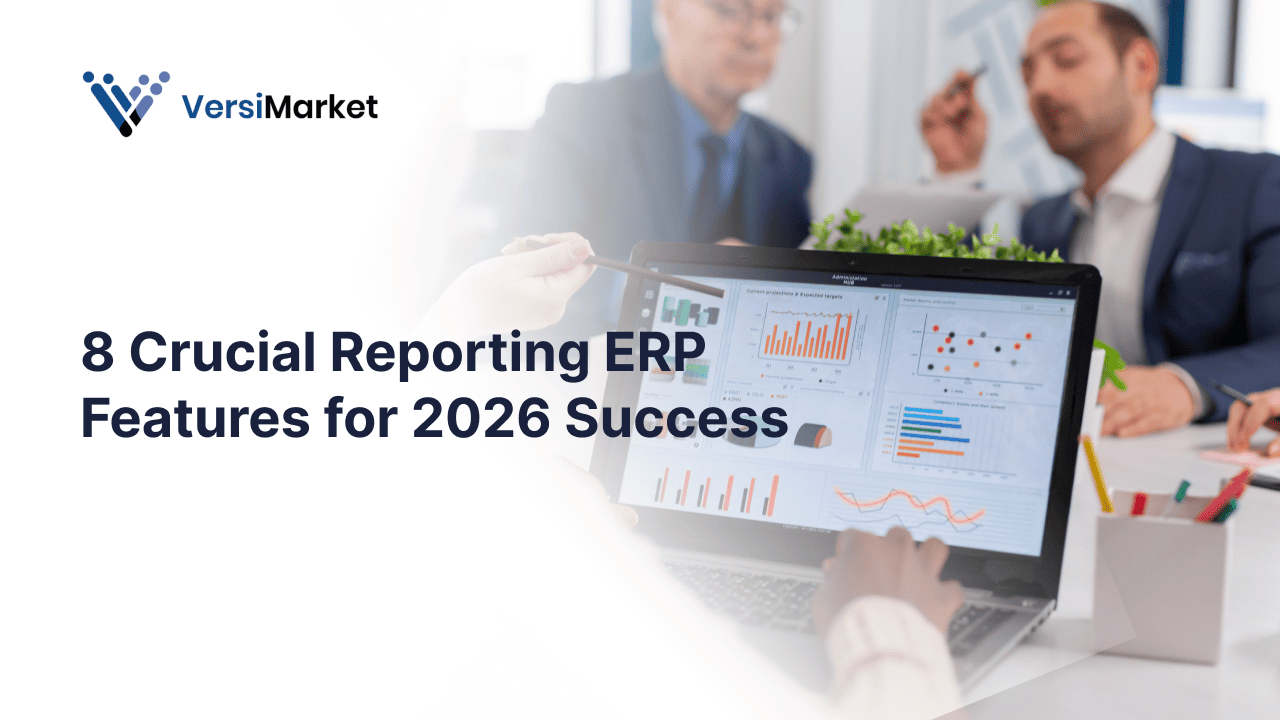
Interactive data visualization has become essential for reporting ERP users. Features such as drill-down charts, data storytelling, and associative models (as seen in Tableau and Qlik Sense) convert raw data into actionable insights.
Visual dashboards within reporting ERP platforms enable users to swiftly identify patterns, trends, and outliers. Competitor analyses reveal that visual dashboards enhance decision-making speed and knowledge-sharing.
Key advantages include:
- Improved data comprehension
- Swifter pattern recognition
- More impactful presentations
By prioritizing interactive reporting ERP tools, organizations position themselves at the forefront of data-driven decision-making.
8. Robust Security, Compliance, and Audit Trails
Security and compliance are imperative for reporting ERP in 2026. Features such as role-specific access, encryption, and comprehensive audit logs guarantee that sensitive data remains shielded.
Reporting ERP solutions must comply with industry standards like SOX and GDPR. Oracle Analytics Cloud, for instance, delivers enterprise-level security and extensive audit trails.
Key benefits include:
- Risk reduction
- Regulatory adherence
- Greater stakeholder confidence
A secure reporting ERP system lays the groundwork for long-term value, establishing a foundation for sustainable business growth.
Developing a Self-Reinforcing ERP Reporting Ecosystem
In the rapidly changing domain of reporting ERP, forming a self-reinforcing ecosystem is now essential for enduring sustainability and value. As organizations strive to unlock their ERP investments’ full potential, creating a community that encourages knowledge-sharing, collaboration, and ongoing improvement has become a strategic focus.
Virtuous Loops and Network Effects in ERP Reporting
Virtuous loops are fundamental to an effective reporting ERP ecosystem. When businesses and freelancers actively collaborate, each new insight or best practice shared enhances the platform’s value for all participants. The more users contribute high-quality work, the richer the pool of actionable intelligence becomes, simultaneously accelerating growth for all members.
Network effects strengthen reporting ERP ecosystems. As more organizations, consultants, and data sources join, the ecosystem’s ability to deliver real-time, relevant analytics expands. For example, talent marketplaces focused on ERP reporting facilitate opportunities for top-tier talent to collaborate, exchange expertise, and address complex reporting challenges collectively.
Benefits of this self-reinforcing ecosystem include:
- Heightened rewards for contributors through knowledge-sharing
- Consistent access to valuable projects for freelancers
- Accelerated professional growth via collaborative intelligence
Ultimately, these virtuous cycles lead to faster adoption, improved outcomes, and a sustainable business model that consistently attracts both clients and skilled professionals.
Sustainable Value Through Ecosystem Connectivity
Sustainable value in reporting ERP stems from seamless connectivity across platforms, tools, and communities. Open APIs and third-party integrations enable organizations to extend core ERP functionalities, becoming a primary destination for premium analytics and actionable insights.
A connected ecosystem fosters long-term resilience. By integrating with marketplaces and utilizing external expertise, organizations can perpetually enhance their reporting ERP strategies. This methodology reduces costs, increases adaptability, and helps future-proof operations against evolving technology trends.
Collaboration with ERP software consulting partners further spurs innovation and optimization. For instance, leveraging ERP Software Consulting Insights empowers organizations to utilize specialized knowledge, ensuring their reporting ERP solutions remain cutting-edge as needs transform.
These network effects generate a virtuous cycle where every new integration, community member, or shared insight enhances the ecosystem’s value. Consequently, businesses that invest in creating and participating in such an ecosystem position themselves as leaders, prepared to capture future opportunities and deliver high-quality work consistently.
Tackling Implementation Challenges: From Vision to Value
Implementing a robust reporting ERP solution is a journey that entails more than merely technology. Organizations frequently encounter obstacles that can hinder progress and diminish the benefits of advanced reporting ERP features. Recognizing these challenges, and understanding how to address them, is crucial for unlocking long-term sustainability and value.
Common Pitfalls in ERP Reporting Rollouts
Many organizations underestimate the intricacies involved in deploying new reporting ERP features. Data silos can persist when legacy systems remain inadequately integrated, resulting in inconsistent or incomplete reporting. Insufficient user adoption often poses another challenge, particularly if teams find the tools complicated or if training is lacking.
Integration obstacles can lead to timeline delays and frustration. Competitor insights indicate that sluggish, rigid reporting processes often originate from poor planning and inadequate communication between IT and business divisions. Without a clear direction, reporting ERP projects are at risk of not meeting expectations.
Best Practices for Successful Feature Adoption
To navigate these challenges, organizations must prioritize stakeholder engagement from the beginning. Involving end users, IT, and leadership ensures that reporting ERP needs are well understood, resulting in smoother adoption. Phased implementations allow teams to gradually adapt, while ongoing training promotes momentum and builds data proficiency.
Leveraging self-service and AI-powered features can alleviate IT bottlenecks and empower a broader range of users within the organization. To explore foundational steps, refer to ERP Implementation Strategies for 2025. Cultivating a culture of knowledge-sharing and collaborative intelligence accelerates the journey toward a self-reinforcing ecosystem, where reporting ERP generates sustainable business value.
Measuring Success: KPIs and Business Outcomes
Assessing the impact of reporting ERP initiatives is vital for achieving long-term success. Key performance indicators encompass report utilization rates, decision-making speeds, error reduction, and return on investment. Organizations that lead in this area utilize these metrics to refine processes and demonstrate value to stakeholders.
Real-world instances illustrate that modern reporting ERP features can revolutionize business outcomes. Companies embracing advanced dashboards and automated alerts have experienced significant improvement in operational efficiency and enhanced collaboration across departments. By tracking the appropriate KPIs, organizations assure that their reporting ERP investments yield high-value work and establish themselves as prime destinations for top-tier talent.
The Future of ERP Reporting: Preparing for 2027 and Beyond
Looking forward, the reporting ERP landscape is set for transformation, driven by rapid technological advancements and changing business requirements. The future will be defined by smarter tools, deeper insights, and more interconnected ecosystems that empower organizations to navigate uncertainty and competition seamlessly.
Emerging Technologies on the Horizon
The upcoming phase of reporting ERP will feature a surge in generative AI, autonomous analytics, and embedded decision intelligence. Generative AI will allow users to craft custom reports and dashboards using natural language, making complex data accessible to a broader audience. Autonomous analytics will automatically reveal trends, patterns, and anomalies, minimizing manual efforts and highlighting opportunities in real time.
Expect innovations such as voice-enabled reporting, enabling users to engage with data hands-free, and real-time scenario simulations to test business strategies prior to execution. Adaptive dashboards will personalize insights for each user, enhancing relevance and engagement. As demonstrated in AI-Driven ERP Systems Transforming Enterprise Operations, these developments will establish reporting ERP as the backbone of agile, high-performing organizations.
The Expanding Role of ERP Reporting in Strategic Leadership
Reporting ERP is swiftly evolving into a cornerstone of strategic leadership, transcending a mere back-office function. As the business environment becomes increasingly volatile, leaders require tools that do more than just recount past events. The transition from descriptive to prescriptive and autonomous analytics allows decision-makers to anticipate changes, mitigate risks, and proactively capitalize on emerging opportunities.
This evolution elevates reporting ERP as a catalyst for innovation, resilience, and competitive differentiation. By leveraging predictive insights and fostering knowledge-sharing, organizations create a self-reinforcing ecosystem where data informs every facet of strategy. In this context, top-tier talent thrives, collaborative intelligence flourishes, and the business evolves into a sought-after venue for high-quality freelance consultants and impactful work.
Action Steps for Future-Ready Organizations
To maintain a competitive edge, organizations must invest in scalable and flexible reporting ERP platforms that accommodate their evolving needs. Cultivating a culture centered around data-driven decision-making is critical, empowering team members at all levels to contribute insights and drive ongoing enhancement. Regular training, open APIs, and marketplace integrations contribute to constructing a sustainable business model that adapts as technology transforms.
Leaders should prioritize compliance, robust security, and transparent audit trails to ensure long-term sustainability and value. By nurturing virtuous loops of knowledge-sharing and collaboration, organizations reinforce the network effects that position reporting ERP as an invaluable asset for future success. Staying alert to emerging trends ensures preparedness for the challenges that 2027 and beyond may present.