Enterprises depend heavily on software systems, also called “Business Applications,” to automate, scale, and optimize their operations. Whether it’s managing employees, processing transactions, or analyzing business data in real time, these software systems, known as Enterprise Applications (EA), serve as the backbone of modern organizations.
In today’s competitive environment, understanding how enterprise applications work and the value they bring can empower businesses to make smarter technology investments. This article explains what an enterprise application is, outlines its core features and benefits, and provides real-world examples of how such systems transform business performance.
Table of Contents
ToggleWhat Is an Enterprise Application?
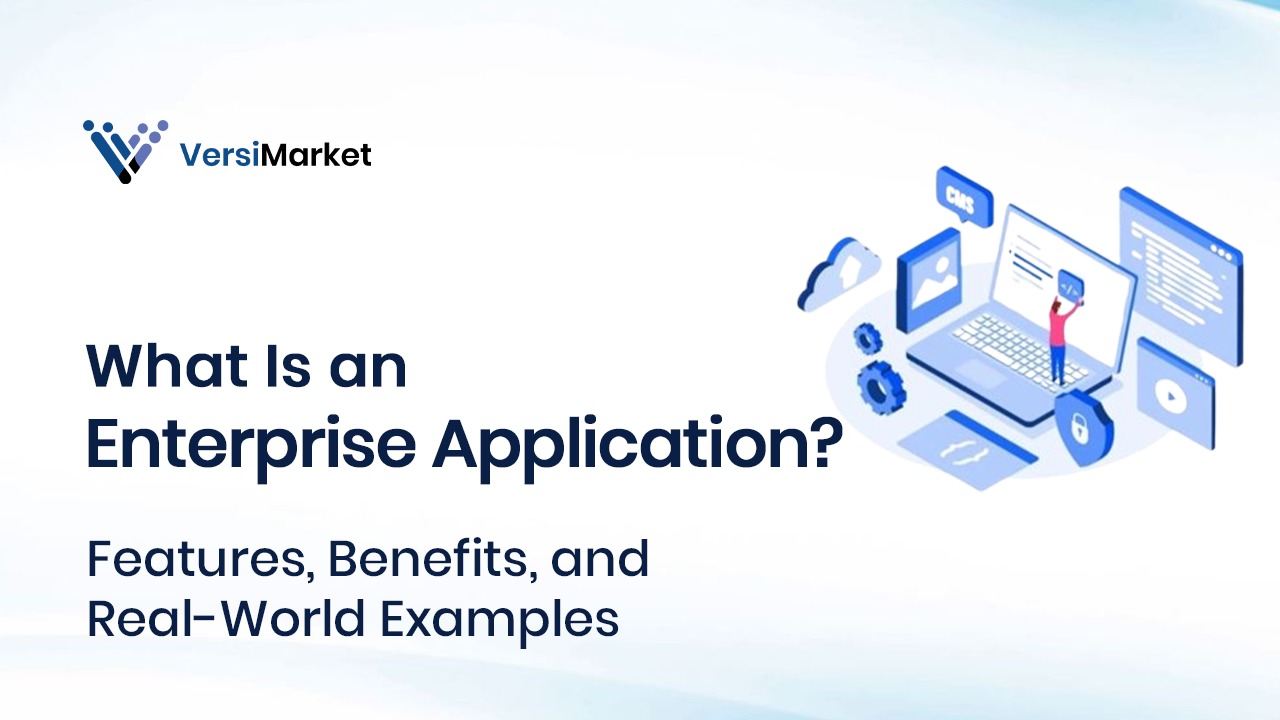
An enterprise application is a large-scale software solution designed to integrate and support critical business processes within an organization. Unlike standalone applications built for individual use, enterprise applications are centralized systems that serve multiple departments: finance, HR, operations, sales, procurement, and beyond.
These applications connect diverse workflows and datasets, ensuring that decision-makers have accurate insights across departments. Enterprise applications are generally built for scalability, security, and high availability, and they form a key part of an organization’s digital infrastructure.
Key Characteristics of Enterprise Applications:
- Company-wide use: Enterprise apps serve multiple users, teams, or departments simultaneously.
- Data centralization: Enterprise applications provide a single source of truth for data, analytics, and reporting.
- Integration capability: Business applications have the integration capability to connect with other enterprise systems through APIs or middleware (like Boomi, Celigo, Informatica, Mulesoft)
- Customizability: Enterprise apps are tailored to meet specific business workflows (including approval workflows to maintain organizational hierarchy)
- Resilience and scalability: Designed to manage large transaction volumes and grow with the organization.
Examples of common enterprise applications include Enterprise Resource Planning (ERP), Customer Relationship Management (CRM), Human Resource Management Systems (HRMS), and Supply Chain Management (SCM) platforms.
Why Are Enterprise Applications Important?
The modern business landscape is data-driven, fast-paced, and hyper-connected. Legacy systems and old software can result in silos, slower decision-making, and costly inefficiencies. Enterprise applications address these challenges by helping organizations:
- Automate repetitive processes to increase productivity.
- Improve collaboration across departments through shared information systems.
- Gain real-time insights from data analytics and reporting.
- Ensure operational consistency through standardized workflows.
- Enhance customer experience by integrating customer data and service systems.
Simply put, enterprise applications enable companies to function more effectively, scale confidently, and innovate faster.
Key Features of Enterprise Applications
The core value of enterprise applications lies in their capabilities. Below are the essential features that make these systems indispensable to modern businesses.
1. Integration Across Business Functions
Enterprise applications integrate multiple functions finance, supply chain, sales, HR, and IT, into one unified platform. This eliminates isolated systems (data silos) and creates seamless information exchange across departments.
For example, when a customer places an order, the system simultaneously updates inventory, triggers invoicing, and informs logistics teams, ensuring a synchronized workflow.
2. Centralized Data Management
Enterprise applications act as a single source of truth, consolidating all company data into one secure repository. This improves data accuracy, enhances analytics, and eliminates duplication.
With centralized data, stakeholders can generate meaningful insights, monitor KPIs, and implement better governance policies.
3. Scalability and Customization
As businesses expand, their software must scale with them. Enterprise applications are designed to handle growth, whether it’s more users, transactions, or new business units.
They are also highly configurable, allowing organizations to add modules or customize workflows based on specific industry needs.
4. Advanced Security and Compliance
Enterprise applications prioritize high security and compliance standards. They include features like encryption, role-based access control, audit trails, and integration with identity management systems to protect sensitive business data.
Many are also compliant with industry-specific regulations such as GDPR, HIPAA, or ISO standards, ensuring legal adherence during global operations.
5. Real-Time Analytics and Reporting
Enterprise-level decisions require accurate and timely insights. These applications often include powerful analytics engines, dashboards, and AI-driven predictions.
Real-time reporting provides transparency across operations, helping organizations manage performance, mitigate risks, and plan strategically.
6. Workflow Automation
Enterprise systems automate routine tasks like purchase approvals, payroll processing, or customer notifications. Automation reduces manual intervention, minimizes errors, and frees employees to focus on higher-value activities such as strategy and innovation.
7. Multi-Device and Cloud Accessibility
Modern enterprise applications are cloud-based and accessible from desktops, tablets, and smartphones. This enhances flexibility, remote collaboration, and business continuity critical in today’s hybrid or distributed workforce environments.
Types of Enterprise Applications
The enterprise technology ecosystem is vast, but most organizations rely on several foundational application types to achieve efficiency and competitive advantage.
1. Enterprise Resource Planning (ERP)
ERP software integrates core business processes such as finance, procurement, inventory, and human resources into one platform. Oracle NetSuite, SAP S/4HANA, and Microsoft Dynamics 365 are leading ERP systems that help companies improve visibility, reduce operational costs, and ensure compliance.
2. Customer Relationship Management (CRM)
A CRM manages customer data, sales processes, and communication channels. Examples like Salesforce or HubSpot streamline marketing and sales activities while improving customer satisfaction and retention.
3. Supply Chain Management (SCM)
SCM applications track goods and materials from procurement through delivery. They provide end-to-end visibility into demand, inventory levels, production planning, and logistics, allowing companies to optimize costs and meet delivery timelines.
4. Human Resource Management System (HRMS)
HRMS software automates employee-related processes such as recruitment, payroll, attendance, and performance management. Solutions like Workday and BambooHR improve workforce efficiency and compliance with labor laws.
5. Business Intelligence (BI) and Data Analytics Tools
BI applications collect, analyze, and visualize data using platforms such as Power BI or Tableau. These tools empower executives with data-driven insights for decision-making and performance tracking.
6. Content Management Systems (CMS)
Enterprise CMS platforms (like Adobe Experience Manager) help organizations manage, publish, and personalize web and marketing content.
7. Project Management Applications
Tools such as Jira or Asana help manage projects, track progress, and coordinate cross-functional teams effectively.
Benefits of Enterprise Applications
1. Improved Efficiency and Productivity
By automating repetitive tasks and integrating systems, enterprise applications streamline workflows and reduce wasted effort. Teams can accomplish more with less, making the entire organization more agile and efficient.
2. Enhanced Decision-Making
Access to accurate, real-time data allows leaders to make informed decisions faster. Dashboards and analytics tools offer performance snapshots of financials, operations, and customer behavior.
3. Scalability and Flexibility
Enterprise applications scale effortlessly with growing data volumes, new users, or business expansions. Cloud-based enterprise systems ensure scalability without costly infrastructure upgrades.
4. Better Collaboration and Communication
When departments share a unified platform, communication bottlenecks dissolve. Enterprise tools facilitate collaboration through shared dashboards, chat integrations, and document management systems.
5. Cost Reduction
While implementation costs can be high, the long-term savings from automation, fewer errors, and optimized workflows far outweigh the initial investment. Cloud enterprise solutions also eliminate the high costs of on-premises infrastructure.
6. Regulatory Compliance
Built-in compliance and audit modules ensure adherence to international and local standards. This reduces legal risks and helps maintain transparency with regulators and stakeholders.
7. Enhanced Customer Experience
Enterprise applications like CRMs connect marketing, sales, and service workflows. Teams gain a unified view of customer interactions, enabling personalized and seamless experiences that build loyalty.
Real-World Examples of Enterprise Applications
1. Oracle NetSuite
NetSuite is one of the most comprehensive cloud-based ERP systems that integrates finance, CRM, eCommerce, and HR functionalities. It allows businesses to run globally, from managing multi-entity financials to automating reporting, making it a favorite among fast-growing enterprises.
2. Salesforce
Salesforce revolutionized CRM solutions by offering cloud-based automation for sales, marketing, and customer service. Its scalability and integration make it ideal for organizations of all sizes aiming to improve customer engagement.
3. SAP S/4HANA
SAP’s flagship ERP focuses on real-time data processing and analytics. Large organizations use it for managing complex supply chains, manufacturing operations, and global compliance requirements.
4. ServiceNow
ServiceNow provides enterprise IT Service Management (ITSM) to automate incident resolution, asset management, and service requests. Many enterprises integrate ServiceNow with other systems to create efficient support ecosystems.
5. Workday
Workday simplifies HR and finance management with cloud-based analytics for compliance, budget planning, and workforce optimization. It’s widely used in industries like healthcare and education.
6. Slack and Jira
These platforms exemplify modern collaboration and project management. Slack integrates with hundreds of enterprise systems to improve communication, while Jira supports agile development teams by managing workflows end-to-end.
7. Microsoft Dynamics 365
Dynamics 365 combines ERP and CRM capabilities across finance, operations, sales, and customer service. It integrates deeply with Microsoft 365 and Azure, making it a strong choice for enterprises already embedded in the Microsoft ecosystem.
8. Oracle Fusion Cloud ERP
Oracle Fusion ERP supports finance, procurement, project management, and risk management. It is widely adopted by large multinational organizations requiring strong compliance, scalability, and advanced analytics.
9. Amazon Web Services (AWS)
AWS provides enterprise-grade cloud infrastructure and services, including compute, storage, databases, and AI. Enterprises rely on AWS to host mission-critical applications with high availability and global reach.
10. Microsoft Azure
Azure is a cloud platform used for application hosting, DevOps, AI, and data analytics. Enterprises use Azure for hybrid cloud architectures and deep integration with on-premise systems.
11. Google Cloud Platform (GCP)
GCP is known for data analytics, machine learning, and scalability. Organizations leverage it for big-data workloads, AI-driven insights, and cloud-native application development.
12. Adobe Experience Cloud
Adobe Experience Cloud enables enterprises to manage digital marketing, customer journeys, analytics, and content personalization across multiple channels.
13. IBM Watson & Enterprise Solutions
IBM provides enterprise AI, automation, and data platforms. Watson is used for predictive analytics, customer insights, and intelligent process automation in regulated industries.
14. Workiva
Workiva is used for financial reporting, ESG, audit, and compliance. It enables secure collaboration and data traceability for public companies and highly regulated enterprises.
15. Coupa
Coupa specializes in procurement, expense management, and spend optimization. Enterprises use it to control costs and improve supplier collaboration.
16. Snowflake
Snowflake is a cloud data warehouse used for enterprise analytics, data sharing, and reporting. It supports large-scale data workloads across multiple cloud providers.
17. Tableau
Tableau enables enterprises to visualize and analyze data through interactive dashboards. It is widely used for executive reporting and self-service analytics.
18. Power BI
Power BI provides enterprise reporting and analytics with strong integration into Microsoft products. It is commonly used for financial, operational, and executive dashboards.
19. Zendesk
Zendesk supports enterprise customer service operations through ticketing, omnichannel support, and analytics. It scales well for global support teams.
20. Atlassian Confluence
Confluence is used as an enterprise knowledge-management and documentation platform. Organizations use it to centralize processes, policies, and technical documentation.
21. SAP Ariba
SAP Ariba manages procurement, supplier networks, and contract lifecycle management. It is commonly used by enterprises with complex global sourcing needs.
22. Okta
Okta provides enterprise identity and access management (IAM). Organizations use it to enforce security, single sign-on (SSO), and user lifecycle management.
23. VMware
VMware delivers enterprise virtualization, cloud infrastructure, and hybrid-cloud solutions, enabling organizations to modernize legacy environments.
24. UiPath
UiPath enables enterprises to automate repetitive business processes using RPA. It is heavily used in finance, HR, and operations for efficiency gains.
25. MuleSoft
MuleSoft provides enterprise integration and API management. Organizations use it to connect ERP, CRM, and third-party systems into a unified architecture.
The Role of Enterprise Applications in Digital Transformation
Enterprise applications are critical enablers of digital transformation. They bridge the gap between manual processes and intelligent automation, empowering businesses to compete in data-driven markets. With integrated AI, machine learning, and predictive analytics, next-generation ERP and CRM systems proactively improve efficiency and decision-making.
Moreover, enterprise applications serve as the foundational layer for emerging technologies such as:
- Internet of Things (IoT): Real-time data from connected devices for predictive analytics.
- Artificial Intelligence (AI): Enhanced decision intelligence through pattern recognition and automation.
- Blockchain: Secure, transparent transaction records for supply chain and financial operations.
- Cloud Computing: Global accessibility and cost efficiency through software-as-a-service (SaaS) models.
By investing in robust enterprise solutions, businesses build an agile digital infrastructure capable of adapting to constant change.
Conclusion
Enterprise applications are no longer optional; they are essential to surviving and thriving in today’s competitive, technology-centric environment. They unify teams, automate repetitive tasks, deliver actionable insights, and empower faster decision-making across all departments.
As emerging technologies such as AI, ML, and IoT continue to evolve, enterprise applications will become increasingly intelligent and autonomous. Organizations that invest early in scalable and well-integrated systems will gain lasting advantages in efficiency, customer satisfaction, and innovation.
About VersiMarket
We are a global go-to marketplace for Enterprise Applications. We help organizations match with Enterprise Applications experts for projects, contracts, and short and long-term flexible hiring. Contact us for your enterprise needs.