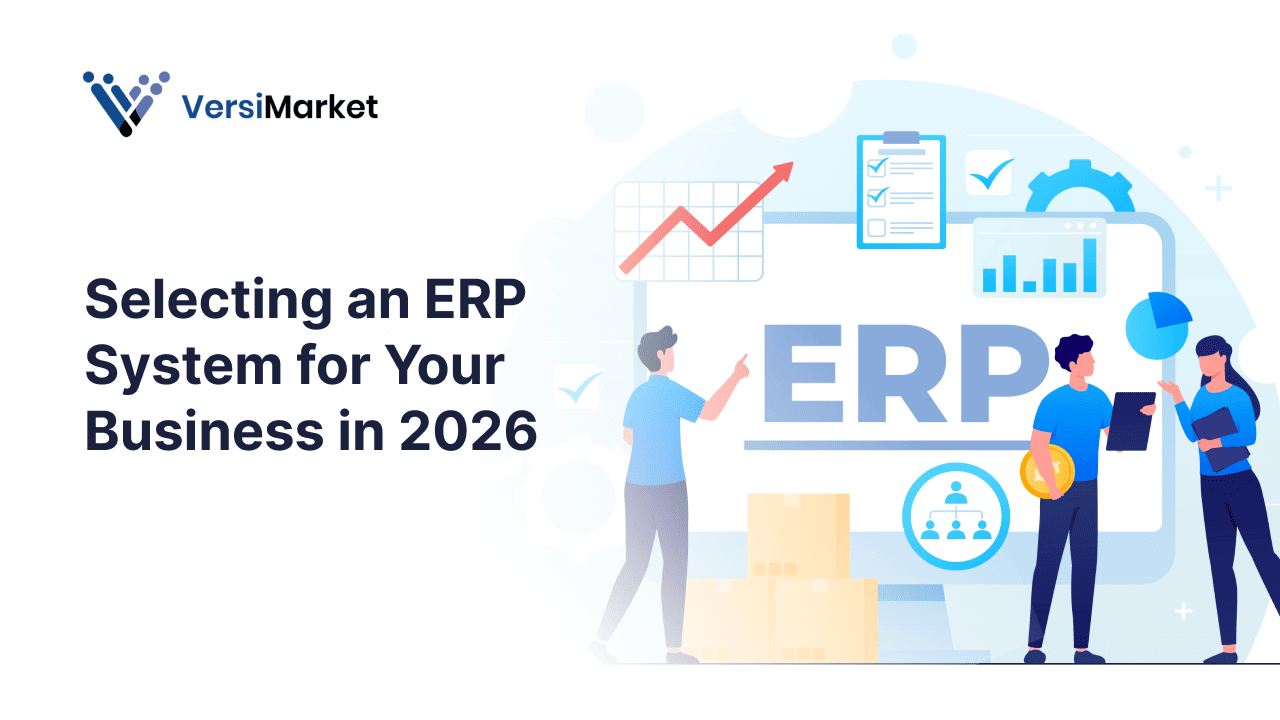
Choosing the ideal ERP (Enterprise Resource Planning) system is essential for today’s evolving businesses. An ERP system centralizes data to optimize operations, enhance visibility, and enable your organization to scale swiftly and effectively. However, making an incorrect choice could deplete your resources, impede productivity, and frustrate your team. At VersiMarket, our mission is to assist companies in navigating the complexities of ERP selection and implementation. Thus, we have created this comprehensive guide on selecting an ERP for your business in 2026.
Table of Contents
Toggle9 Steps for Selecting an ERP in 2026
1. Gather Team Input
Implementing an ERP system is a transformative process that affects your entire organization. Therefore, it is vital to incorporate feedback from all stakeholders when determining which system is best for your team. Those who will regularly use the system should play a significant role in the evaluation. They can highlight usability issues or missing functionalities, and their early engagement ensures a smoother rollout.
It’s advisable to form a cross-departmental selection team with representatives from finance, operations, HR, and other critical areas. This approach will provide diverse perspectives, clarify needs, and facilitate a seamless adoption process.
2. Clarify Your Requirements
Finding the right ERP system is not just about identifying the most popular choice; it’s about determining the best match for your organization’s requirements. Hence, it’s crucial to define those needs clearly. Start by outlining your existing business processes, challenges, and future aspirations.
Ask yourself (and your team) the following inquiries:
- Which workflows are causing the most complications?
- Where are we experiencing time losses or lack of visibility?
- What are our major compliance or reporting obligations?
This examination will help you pinpoint the features and functionalities you genuinely require, whether that be multi-entity accounting, inventory management, or custom workflow automation.
3. Factor in the Total Cost of Ownership
While it would be ideal for budget constraints not to exist, they often do. Therefore, it is important to consider your financial limits when selecting an ERP system for your organization.
Remember that ERP expenses extend beyond the initial price tag. Additional costs can include:
- Licensing fees (per user or module)
- Implementation and consulting expenses
- Training and change management
- Ongoing support and maintenance
To maintain your financial health, establish a realistic budget that considers both short-term and long-term costs, and keep this figure in mind as you review your options.
4. Evaluate Integration Capabilities
Modern organizations typically involve numerous moving components and intricate software systems. It’s common to utilize a variety of tools in daily operations. The key is ensuring these systems can operate effectively together.
Integrations, and any deficiencies in them, should be a primary consideration during your ERP selection process. The system you opt for should seamlessly integrate with your existing essential tools: such as your CRM, payroll provider, or e-commerce platform. Superior integrations lead to less manual data entry, fewer errors, and improved reporting.
5. Research Your Options & Analyze Systems
The ERP market is expansive and continually evolving. From major players like NetSuite, Oracle, and SAP to adaptable, open-source platforms like Odoo and mid-market solutions like Microsoft Dynamics, there isn’t a one-size-fits-all solution. The suitable ERP system for your unique organization hinges on your business model, workflows, and long-term objectives.
Take time to meticulously assess your alternatives by:
- Scheduling demos across various platforms to see how each system accommodates your real-world workflows and edge cases.
- Comparing user interfaces and customization options since an intuitive UI and flexible configuration can lead to quicker adoption and better long-term usability.
- Assessing integration capabilities, determining how well each system interacts with your existing technology stack: CRMs, payroll systems, reporting tools.
- Reviewing independent critiques and analyst rankings; resources like Gartner Magic Quadrant, G2, and Capterra can provide impartial insights into performance, support, and satisfaction.
- Talking to users in similar sectors to obtain genuine feedback about potential challenges or benefits beyond marketing materials.
Above all, remember: popularity doesn’t always equate to quality. Concentrate on fit, scalability, and how well a system aligns with your business operations.
6. Emphasize Scalability
Your ERP system should cater to your current needs and evolve with you. For long-term success, it is essential to select a system that can accommodate your growth, including more users, additional locations, and expanded workflows.
As you evaluate your options, ask the following:
- Can it manage multi-entity accounting, multi-currency, or international tax regulations?
- How easy is it to add new users, modules, or business units?
- Will performance remain strong as data volumes increase?
Since your ERP serves as a long-term investment, it should propel you forward rather than hold you back.
7. Assess Vendor Support & Implementation Schedule
ERP implementation represents a significant project. Therefore, vendor support and timelines are crucial. Some systems provide preconfigured, “plug-and-play” setups with minimal onboarding and maximum convenience, while others may need extensive customization, data migration, and user training.
Consider the following criteria for each option as you make your choice:
- The average time to launch based on your company’s size and industry
- How implementation is managed (internally, through partners, or by consultants)
- The type of support available. Is it available 24/7? Will you have a dedicated representative?
- What’s included after launch: training, updates, troubleshooting?
In many instances, employing a third-party ERP consultant can be advantageous, as they can assist your team with planning, setup, and change management.
8. Review Rankings and Reputations
Although choosing an ERP system should not be a contest of popularity, it is essential to take reviews into account to reinforce your choice and avoid substantial missteps.
Research is key. Platforms like Gartner, G2, Software Advice, and TrustRadius provide reliable third-party rankings and peer assessments based on real-world experiences.
Consider the following aspects:
- Customer satisfaction
- Implementation quality
- Support response times
- Ease of use and scalability
Pay attention to feedback from organizations within your sector or of similar size, as those use cases will be most relevant to your situation. Additionally, examine the vendor’s history: How long have they been operating? Are they consistently updating their system? What does their roadmap entail? Addressing these questions will aid you in making the most suitable choice for your team.
9. Identify the Right ERP Consultant
For the most effective ERP implementation, hiring a consultant can significantly enhance your process. You require an expert well-versed in your industry, your objectives, and how to tailor the system to suit your business needs. Even the finest system can underperform without the right expertise.
This is where VersiMarket excels. Our on-demand ERP consultants are extensively experienced, thoroughly vetted, and supported by a network of enterprise specialists. Whether you’re selecting a new system or fine-tuning one you’ve already put in place, we can help you maximize your ERP investment.
Unlike conventional consultancies, VersiMarket consultants are part of a broader expert community. Thus, you not only enlist an individual; you access a collective.
We can assist you with:
- Selecting the best-suited ERP platform
- Tailoring it to your specific workflows
- Training your team to ensure seamless adoption
- Enhancing performance post-launch
Therefore, you don’t have to navigate the complexities of your new system alone. VersiMarket is here to support you.
Conclusion
Selecting the appropriate ERP system transcends software alone: it’s about alignment, insight, and execution. By taking the time to make a well-grounded decision, you set your business up for years of efficiency and growth.