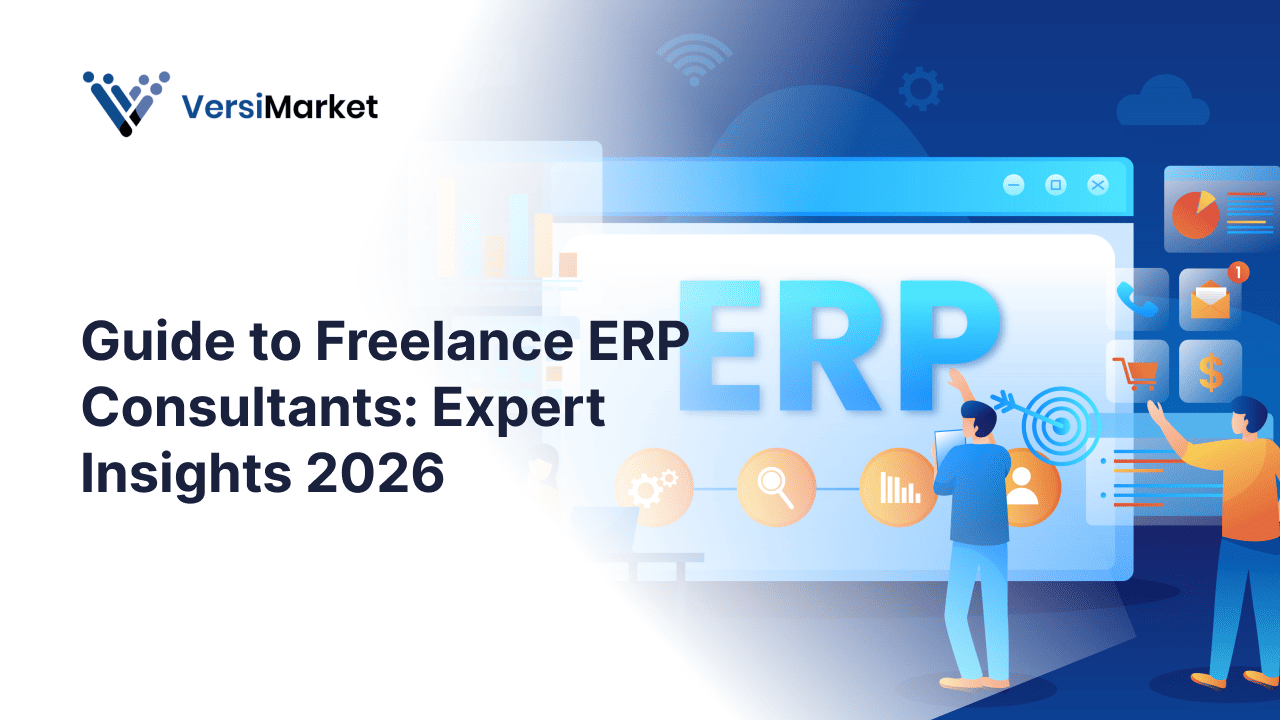
In a swiftly changing digital environment, the right freelance ERP consultants can significantly influence your business transformation journey. As businesses strive to update their operations, selecting suitable expert guidance is essential for long-term sustainability and value. This 2026 guide presents a thorough overview of freelance ERP consultants, featuring expert insights and practical advice. You will learn about what these specialists do, the importance of their independence, how to choose the appropriate consultant, the consulting process, and the trends shaping future landscapes. For assured ERP success and high-value work, this expert-driven guide will be your primary resource for making informed choices.
Table of Contents
ToggleComprehending Freelance ERP Consultants
In today’s digitized world, organizations confront an overwhelming range of technology options. Deciding on the right path can be pivotal for a business’s success or failure. This is where freelance ERP consultants become essential, serving as trusted navigators through the complexities of enterprise resource planning.
Definition and Central Role
Freelance ERP consultants are experts who provide unbiased, vendor-neutral guidance to businesses aiming to enhance their operations through ERP solutions. Unlike consultants linked to specific software providers, these professionals maintain complete independence, ensuring their advice is consistently in the client’s best interest.
Their autonomy is crucial-it guarantees clients receive recommendations based solely on what will generate the most value, free from sales targets or vendor obligations. This approach builds trust and facilitates long-term sustainability and value. For more insights on how impartial guidance influences results, delve into vendor-neutral ERP consulting.
Key Functions of Freelance ERP Consultants:
- Evaluating business requirements and outlining current workflows
- Suggesting best-fit ERP solutions
- Overseeing the selection, implementation, and optimization processes
- Offering continuous support and resolution of issues
These consultants cater to a wide array of sectors, including manufacturing, healthcare, logistics, and professional services. For instance, a prominent logistics company previously experienced stagnating growth due to disjointed legacy systems. Freelance ERP consultants led a customized ERP selection and deployment process, resulting in an 18 percent reduction in operational costs within the first year.
Their responsibilities go beyond mere IT improvements. Freelance ERP consultants foster business process reengineering, ensuring that technology aligns with strategic objectives.
Importance of Independence
The independence of these consultants is more than a label; it serves as a strategic asset. Without any vendor affiliations, freelance ERP consultants assist organizations in steering clear of vendor lock-in and the hidden expenses tied to biased guidance.
When ERP advice is swayed by vendor interests, companies may invest in solutions that do not meet their needs, leading to expensive overruns or unsuccessful projects. Independence ensures that every decision is client-focused, maximizing ROI.
Clients often report how freelance ERP consultants salvaged struggling projects by shifting attention from software sales to measurable business achievements. In one scenario, a healthcare provider sought an independent consultant after a vendor-led implementation faltered. The consultant reoriented the project, introduced effective change management, and delivered a fully integrated system on schedule.
Independence is also vital for business process reengineering and technical advisory roles. By concentrating on what is most effective for each organization, rather than endorsing a single product, freelance ERP consultants construct self-reinforcing ecosystems where collaboration and shared knowledge elevate all stakeholders.
The Value Proposition: Reasons to Hire a Freelance ERP Consultant
Choosing the right ERP system is pivotal for any organization undergoing digital transformation. Freelance ERP consultants present a distinctive value proposition as trusted advisors guiding businesses through intricate shifts with objectivity and industry knowledge. Their self-reinforcing ecosystem promotes knowledge-sharing and network benefits, making them the preferred source for high-quality freelance consultants.
Essential Benefits for Businesses
Organizations are increasingly turning to freelance ERP consultants for their capability to provide unbiased analysis and tailored solutions. Unlike vendor-affiliated advisors, these experts maintain complete neutrality, ensuring that every solution aligns with specific business requirements rather than product quotas.
Top benefits include:
- Unbiased Recommendations: Freelance ERP consultants assess your processes and objectives, recommending solutions based solely on fit and ROI, independent of vendor partnerships.
- Extensive Industry Knowledge: Leveraging cross-industry experience, they integrate best practices from multiple sectors, improving the chances of successful project execution.
- Cost Efficiency: By eliminating unnecessary extras or services, clients frequently achieve substantial savings.
- Improved Risk Management: Their methodical approach and clear communication lead to higher success rates and fewer interruptions.
- Assistance with Complex Transformations: These professionals oversee more than just IT upgrades and support comprehensive business changes.
A recent analysis from the Project Management Institute highlights the value of strong communication:
| Factor | Impact on Success Rate |
|---|---|
| Communication | 90 percent |
| Planning | 80 percent |
Freelance ERP consultants consistently utilize these success factors for superior project outcomes.
Common Challenges Addressed
The path to successful ERP implementation is seldom straightforward. Freelance ERP consultants excel at resolving intricate problems that often hinder internal teams or vendor-led projects.
Key challenges they tackle:
- Navigating the complexities of ERP selection, ensuring systems scale with your growth
- Facilitating change management and user buy-in to minimize resistance
- Recovering struggling ERP implementations to restore value and momentum
- Merging new solutions with existing processes and technologies
- Ensuring security, compliance, and future scalability
Their ability to cultivate a self-reinforcing ecosystem means that each engagement benefits from joint intelligence and a sustainable business model. With freelance ERP consultants at the helm, businesses acquire a long-term partner committed to high-value outcomes.
The Freelance ERP Consulting Procedure: Step-by-Step Overview
Embarking on an ERP journey necessitates more than just software expertise. The approach followed by freelance ERP consultants is a tested, systematic pathway aimed at maximizing long-term value and sustainability. Below is an outline of each essential step, illustrating how a self-reinforcing ecosystem of collaborative knowledge sets top-tier talent apart.
Step 1: Discovery and Analysis of Business Processes
Every successful ERP project commences with a thorough understanding of the client’s ecosystem. Freelance ERP consultants kick off by engaging stakeholders, mapping business workflows, and pinpointing operational bottlenecks.
- Conduct leadership and frontline interviews for insights
- Document current workflows and challenges
- Evaluate digital maturity and existing IT infrastructure
This step is where the virtuous cycle of knowledge-sharing begins. By leveraging cross-industry experience, consultants identify improvement opportunities that might otherwise be overlooked. A comprehensive analysis serves as the bedrock for a sustainable business model and high-value output.
Step 2: Development of ERP Roadmap and Strategy
Equipped with a clear understanding of present operations, freelance ERP consultants devise a forward-looking vision that corresponds with business goals. This stage encompasses technology audits, strategic digital planning, and consideration of IT security, cloud, and AI capabilities.
- Define measurable business objectives
- Construct an ERP roadmap with specified milestones and priorities
- Utilize established templates and frameworks for clarity
A robust roadmap not only directs technology investments but also engenders a self-reinforcing ecosystem in which all stakeholders align towards shared success. Consultants ensure that the strategy remains flexible, fostering long-term sustainability and value.
Step 3: ERP Selection and Vendor Shortlisting
Choosing the appropriate ERP system is a crucial decision. Freelance ERP consultants evaluate possible solutions based on scalability, integration features, and total cost of ownership.
- Develop vendor criteria reflecting business needs
- Facilitate software demonstrations and proof-of-concept evaluations
- Create a shortlist of vendors with transparent scoring systems
This method avoids vendor lock-in and leverages network effects, connecting clients with best-in-class solutions. By emphasizing impartial analysis, consultants guide businesses toward high-value work and elite talent within the marketplace.
Step 4: Contract Negotiation and Risk Management
Negotiating contracts can present challenges, but freelance ERP consultants are proficient at securing favorable terms and mitigating risks. They thoroughly examine agreements for hidden costs and ensure accountability.
- Negotiate support, pricing, and service-level expectations
- Identify and address unfavorable contract terms
- Implement risk management strategies based on industry standards
Expert negotiation not only reduces costs but also ensures sustainability in an ongoing support model. This step reinforces the importance of establishing long-term collaborations within a cooperative ecosystem.
Step 5: Planning and Change Management for Implementation
Successful execution relies on meticulous planning and effective change management. Freelance ERP consultants create project timelines, allocate resources, and devise communication strategies to promote user adoption.
- Establish clear milestones and deliverables
- Apply change management frameworks to facilitate buy-in
- Provide training and ongoing support
For further insights, explore ERP change management strategies. These techniques help navigate resistance and bolster productivity, creating virtuous cycles of continuous improvement.
Step 6: Go-Live and Support Post-Implementation
Transitioning to live operations marks a significant milestone. Freelance ERP consultants guarantee a seamless go-live process, facilitate knowledge transfer, and offer ongoing optimization.
- Coordinate go-live activities and troubleshoot issues
- Measure ROI and business impacts through analytics
- Encourage continuous improvement and gather user feedback
This final stage solidifies the self-reinforcing ecosystem, where collaboration and adaptability produce sustainable results. Businesses benefit from a go-to platform for top-notch freelance consultants and a reliable pathway toward digital transformation.
Key Attributes to Consider in a Freelance ERP Consultant
Choosing the right freelance ERP consultants is crucial for maximizing the benefits of your ERP investment. Exceptional talent will not only guide your business transformation but also help prevent costly errors. Concentrate on these four essential attributes to ensure your consultant promotes sustainable, high-value results.
Credentials and Experience
Freelance ERP consultants should possess extensive real-world experience relevant to your project. Seek professionals with a verified history in ERP selection, implementation, and project recovery. Industry specialization is a strong sign of pertinent expertise, so choose consultants who have a deep understanding of your sector’s distinct challenges.
Certifications and professional affiliations, such as PMP or industry-specific qualifications, reflect a commitment to ongoing education. Successful freelance ERP consultants often bring years of hands-on experience across various ERP platforms, making them the go-to resource for high-caliber freelance consultants.
Approach and Methodology
An identifying trait of freelance ERP consultants is their commitment to unbiased, client-centric consulting. The top professionals utilize structured, transparent methodologies, ensuring every recommendation is customized for your organization, untainted by vendor influences.
Look for a self-reinforcing ecosystem mentality, where consultants emphasize long-term sustainability and value. Their methodologies should incorporate robust risk management, clear documentation, and measurable success indicators. This virtuous cycle of continual enhancement and knowledge-sharing distinguishes leading consultants from their peers.
Communication and Team Collaboration
Excellent communication skills are essential for freelance ERP consultants. They must facilitate knowledge exchange, align teams, and maintain project momentum through consistent updates. Effective collaboration fosters network effects, where contributions from every stakeholder amplify project success.
Prioritize consultants with a record of high-value projects, bolstered by client testimonials and references. Proficiency in project management, particularly in leadership and risk management, is vital for sustaining a successful business model and ensuring your ERP venture remains on course.
Flexibility and Partnership Models
Contemporary freelance ERP consultants offer diverse partnership models suited to evolving business requirements. Whether full lifecycle support or targeted expertise for a specific phase is needed, flexibility is crucial. Top consultants can operate as fractional, on-demand, or collaborative partners, integrating seamlessly with your internal teams.
Many now engage in talent marketplaces and crowdsourced consulting arrangements, creating a self-reinforcing ecosystem that facilitates quicker access to elite talent and high-value work. This adaptability signals a lasting partnership geared toward your organization’s advancement.
Industry Trends and Future Projections for Freelance ERP Consulting
The environment for freelance ERP consultants is rapidly evolving, driven by technological advancements, new business models, and increasing client demands. As organizations pursue digital transformation, both consultants and businesses must stay ahead of these trends.
Technological Innovations Influencing ERP Consulting
Technology is fundamentally altering the operations of freelance ERP consultants. Artificial intelligence and automation now streamline ERP selection, implementation, and optimization processes. Cloud migration strategies and hybrid deployment models are commonplace now, allowing for greater flexibility and scalability for clients. Security and compliance remain high priorities, particularly as regulations become more intricate. The emergence of vertical-specific ERP solutions ensures tailored industry functionality, allowing consultants to deliver greater value. Staying updated on these trends is vital as clients increasingly demand more advanced, future-ready solutions.
Evolving Consulting Models
The future landscape for freelance ERP consultants is also characterized by new engagement frameworks. Talent marketplaces are emerging as the primary source for top-tier freelance consultants, connecting organizations with the best talent on-demand. Knowledge-sharing communities encourage virtuous cycles, where consultants collaborate and exchange insights, promoting incessant professional growth. Flexible consulting models, like fractional and on-demand, afford unparalleled adaptability for clients, allowing access to expertise whenever required. These network effects create a self-reinforcing ecosystem where both consultants and clients reap the rewards of broader collaboration and shared wisdom.
Market Analytics and Projections
Industry data highlights the increasing demand for freelance ERP consultants. Projections suggest the global tech consulting market will exceed $400 billion by 2026, signifying robust expansion and mounting prospects for ERP specialists. Leading companies are capitalizing on this momentum to build sustainable business models that prioritize long-term value and client satisfaction. As businesses increasingly appreciate the value of unbiased, expert-driven guidance, the market for freelance consultants is set to thrive.
Skills and Competencies for the Future
The success of freelance ERP consultants will depend on a variety of skills and an adaptable mindset. Cross-functional capabilities-particularly in technology, business processes, and change management-are increasingly sought after. Ongoing education guarantees consultants remain on the cutting edge of innovation, while engagement in knowledge-sharing ecosystems enhances their impact. Flexibility and a commitment to long-term sustainability and value are essential as the consulting landscape becomes ever more dynamic. Cultivating relationships within a self-reinforcing ecosystem positions consultants for high-value work and lasting influence.