
NetSuite implementation is one of the most important digital transformations an enterprise can undertake, and when executed correctly, it becomes a catalyst for operational efficiency, financial control, and scalable growth. For businesses across the US, UK, and UAE, the ability to implement NetSuite effectively determines whether the ERP delivers on its promise of unifying systems, improving compliance, and empowering decision-making. In this guide, we break down everything you need to know, from what NetSuite implementation means to the steps, costs, challenges, and the role of consultants.
What is NetSuite Implementation?
NetSuite implementation is the process of configuring, migrating, and aligning the NetSuite ERP platform with your organization’s business processes and goals. It is not just about installing software; it involves mapping workflows, integrating existing systems, consolidating data, and enabling role-based access and security.
Outcomes of a successful implementation include:
- Faster financial close cycles.
- Streamlined order to cash (O2C) and procure to pay (P2P).
- Improved inventory accuracy and reporting.
- Enhanced compliance and stronger audit trails.
When mismanaged, however, enterprises face NetSuite implementation problems such as delays, budget overruns, or poor adoption. That’s why structured methodology and expert guidance are crucial.
Why Enterprises Choose NetSuite Implementation
The decision to move forward with implementing NetSuite often comes at a point of inflection for enterprises:
- Expanding globally and requiring multi entity consolidation.
- Increasing multi currency transactions.
- Rising complexity in inventory and supply chain management.
- Stronger compliance and reporting requirements.
- The need to replace fragmented legacy systems with a unified ERP.
Industries such as SaaS, manufacturing, eCommerce, retail, and wholesale distribution find NetSuite particularly transformative because it eliminates duplicate manual processes and supports scalable growth.
NetSuite Implementation Services Explained
The choice of NetSuite implementation services directly impacts ROI. Enterprises typically evaluate three approaches:
- Self Implementation
Only feasible if your team already has seasoned ERP architects and administrators. Without this expertise, risks include extended timelines, costly rework, and operational disruptions. - Direct with Vendor
Ensures alignment with NetSuite’s own team, but may lack industry specific expertise and responsiveness. - Partner Led Implementation
Working with NetSuite ERP implementation partners ensures domain expertise, proven methodologies, and flexibility in resourcing. Most enterprises choose this model as it balances cost, quality, and risk mitigation.
NetSuite Implementation Steps
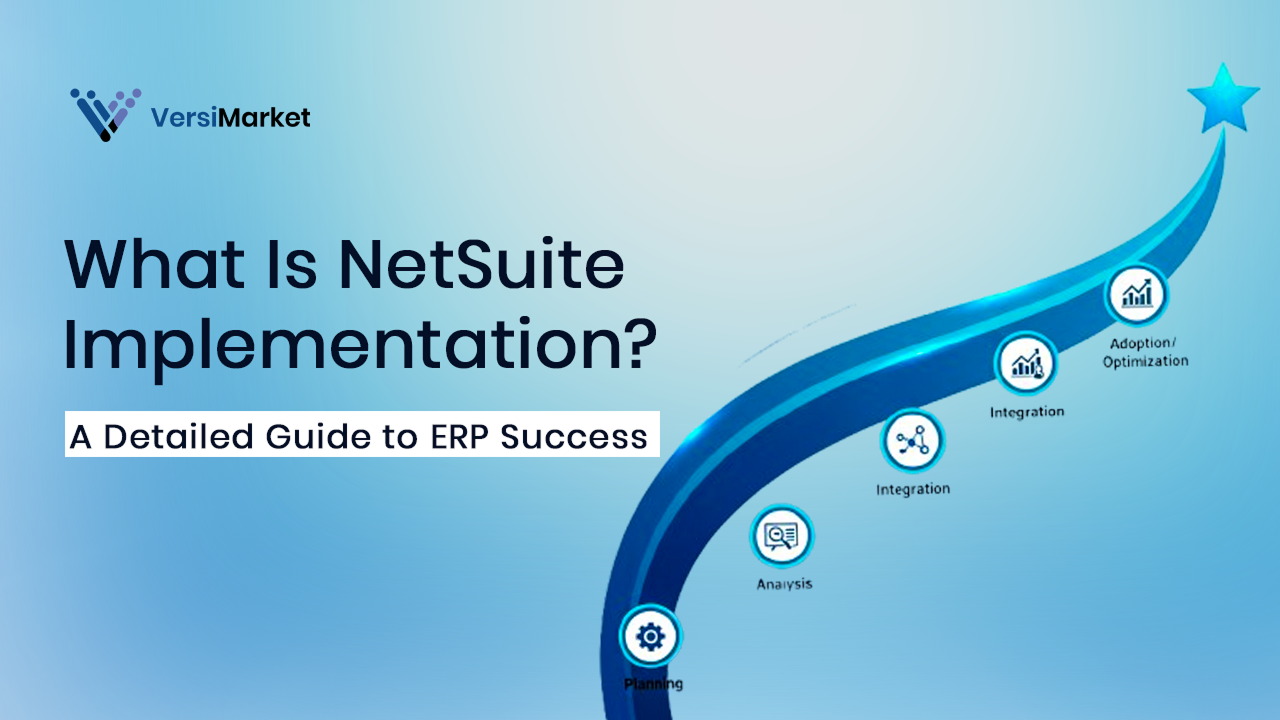
Enterprises succeed by following a structured, phased approach. Below is an overview of NetSuite implementation steps:
- Discovery & Scoping: Define business objectives, map processes (O2C, P2P, R2R), and outline integrations.
- Project Planning: Establish milestones, assign roles, and prepare change management frameworks.
- Configuration & Build: Set up modules, roles, workflows, and customizations.
- Data Migration Cleanse, map, and migrate data with integrity checks.
- Training: Provide role-based sessions and department-specific material.
- Testing (Unit, SIT, UAT): Validate against requirements and define acceptance criteria.
- Cutover & Go Live: Freeze windows, migrate balances, and activate hypercare support.
- Post Go Live Optimization: Tune performance, introduce enhancements, and plan future phases.
Following a structured NetSuite implementation methodology reduces risks, ensures accountability, and drives measurable ROI.
Building a NetSuite Implementation Project Plan
A detailed NetSuite implementation project plan provides structure and visibility. Key elements include:
- Roles & Responsibilities: Defined using a RACI matrix to ensure accountability.
- Milestones & Deliverables: Trackable checkpoints for testing, training, and cutover.
- Change Management: Communication and adoption strategies to drive user buy in.
- Risk Mitigation: Contingency planning for delays, data errors, or integration failures.
Enterprises that prioritize change management alongside technical planning achieve smoother adoption and faster ROI.
Common NetSuite Implementation Problems and How to Avoid Them
ERP rollouts are often derailed by predictable mistakes. Here are some common NetSuite implementation problems and proven solutions:
| Problem | Impact | Solution |
| Over Customization | Higher costs, complex maintenance | Use standard features first; customize only where necessary |
| Weak Data Migration | Corrupted records, reconciliation failures | Start cleansing early, test repeatedly, and sequence loads carefully |
| Poor UAT (User Acceptance Testing) | Missed requirements, weak adoption | Tie tests to requirements, provide role specific training |
| Over Permissioning | Compliance risks, security gaps | Apply least privilege roles and periodic SoD audits |
By anticipating these challenges, enterprises can proactively manage risk.
NetSuite Implementation Costs – What Enterprises Need to Know
Understanding NetSuite implementation costs upfront prevents budget overruns. Cost components typically include:
- Configuration & Customization
- Data Migration & Integrations
- Training & Testing
- Project Management
- Post Go Live Support
Hidden costs may arise from iPaaS licensing, underestimated training requirements, or ongoing administrative needs. Enterprises that budget for these variables maintain tighter control over spend and maximize ROI.
Choosing the Right NetSuite Implementation Consultants
The choice of NetSuite implementation consultants determines project success. Enterprises should evaluate consultants and partners using criteria such as:
- Verified NetSuite certifications.
- Industry-specific references.
- Proven methodologies and governance models.
- Strong data migration and integration strategies.
Whether fixed scope or time and materials, engagements must clearly define deliverables, acceptance criteria, and hypercare support. On VersiMarket, businesses gain access to vetted NetSuite experts who combine deep ERP expertise with industry knowledge ensuring projects are not only delivered but optimized for long term success.
Best Practices for Successful NetSuite Implementation
To maximize ERP success, enterprises should follow best practices:
- Sandbox Governance: Align refreshes with close cycles, seed test data, and validate URLs.
- Role-Based Security: Apply least privilege access, enforce MFA/SSO, and segregate duties.
- Continuous Optimization: Treat implementation as a phased journey, introducing enhancements after stabilization.
These practices strengthen compliance, reduce risks, and enhance long-term ERP value.
Conclusion
A successful NetSuite implementation is more than a technology upgrade; it’s a business transformation. From planning and data migration to training and optimization, enterprises must follow a structured methodology, manage risks, and choose trusted consultants. When executed effectively, the results include faster closes, streamlined processes, better compliance, and scalable growth.
Join VersiMarket Today

Enterprises across the US, UK, and UAE trust VersiMarket to connect them with certified NetSuite implementation consultants and ERP experts who deliver results.
- For Businesses: Post your project and hire vetted NetSuite ERP experts.
- For Consultants: Join VersiMarket and become part of a trusted network of enterprise specialists.
Start your journey with VersiMarket today and ensure your NetSuite implementation drives true business transformation.