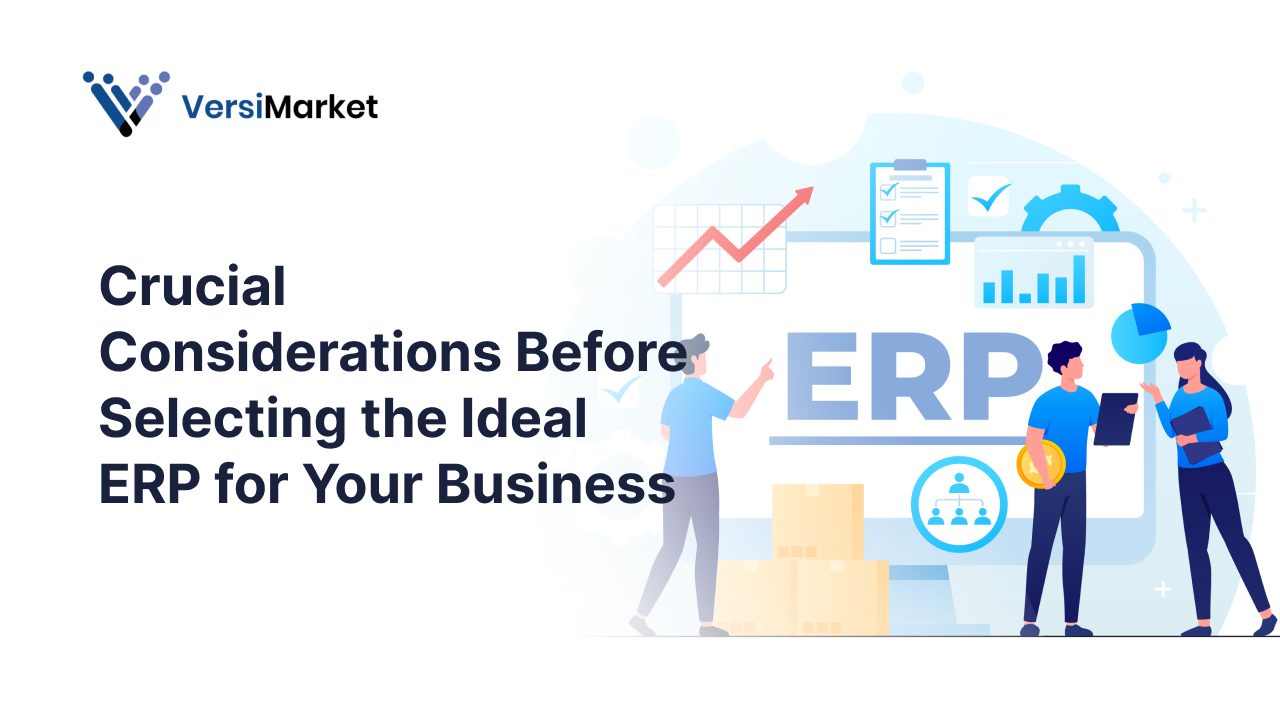
Enterprise Resource Planning (ERP) systems are vital for modern businesses that are expanding and technology-driven. Whether your organization has 25 staff members or generates $500 million in revenue, ERPs significantly contribute to streamlining operations and ensuring accurate financial management. Selecting the appropriate ERP system can optimize your organization’s processes, resulting in increased efficiency and compliance. Prior to making this important decision, consider the key factors to guarantee the ERP you choose is the best match for your business.
Table of Contents
Toggle6 Considerations to Evaluate for Selecting the Ideal ERP
1. Business Model and ERP Needs
What is your requirement for an ERP? Which modules should the chosen ERP encompass? Would either an ERP or a CRM suffice for your business model? What return on investment are you expecting from this ERP? These and many other questions will provide clarity on the needs your organization seeks in the ERP search.
2. Size of Your Organization
The size and transaction volume within your organization dictate the structure of your ERP. While most ERPs manage transaction volumes effectively, it is advisable to monitor transaction volumes and refrain from selecting an expensive and comprehensive ERP if your organization is still at an early stage.
3. Budget
Determine the budget you plan to allocate for the ERP. Include all aspects in your budget, such as licenses, implementation, possible customizations, and support services. Assess the anticipated return on the ERP investment through reduced manual labor hours and greater efficiency in completing tasks timely.
4. Cost Compare Each Evaluated ERP
Conduct a search for ERPs based on points 1 and 2, then filter them according to price. Align your budgetary requirements with the services offered in the ERP price list. Delve into each offering presented by the recommended ERP and review user feedback and comments regarding the services provided.
5. Navigate the Systems
Familiarize yourself with the complexities of the short-listed systems. Request user demonstrations to gauge the user-friendliness of the interface. Engage in discovery calls to ensure your business needs align with the ERP capabilities.
6. Evaluate the Implementation Process
Assess how many teams will be involved in facilitating the transition. What type of on-site training will your users require? Will support be available after ERP implementation? What plan is in place for data migration activities post-implementation?
By thoroughly examining these factors and ensuring that an ERP system aligns with your business needs, you can make a well-informed decision that fosters your organization’s growth and efficiency. VersiMarket presents NetSuite ERP as a powerful choice. It provides a comprehensive feature set that caters to various business needs while ensuring reliable scalability, financial management, and process automation. Opting for NetSuite can aid your business in streamlining operations, enhancing decision-making, and maintaining agility in a competitive landscape.