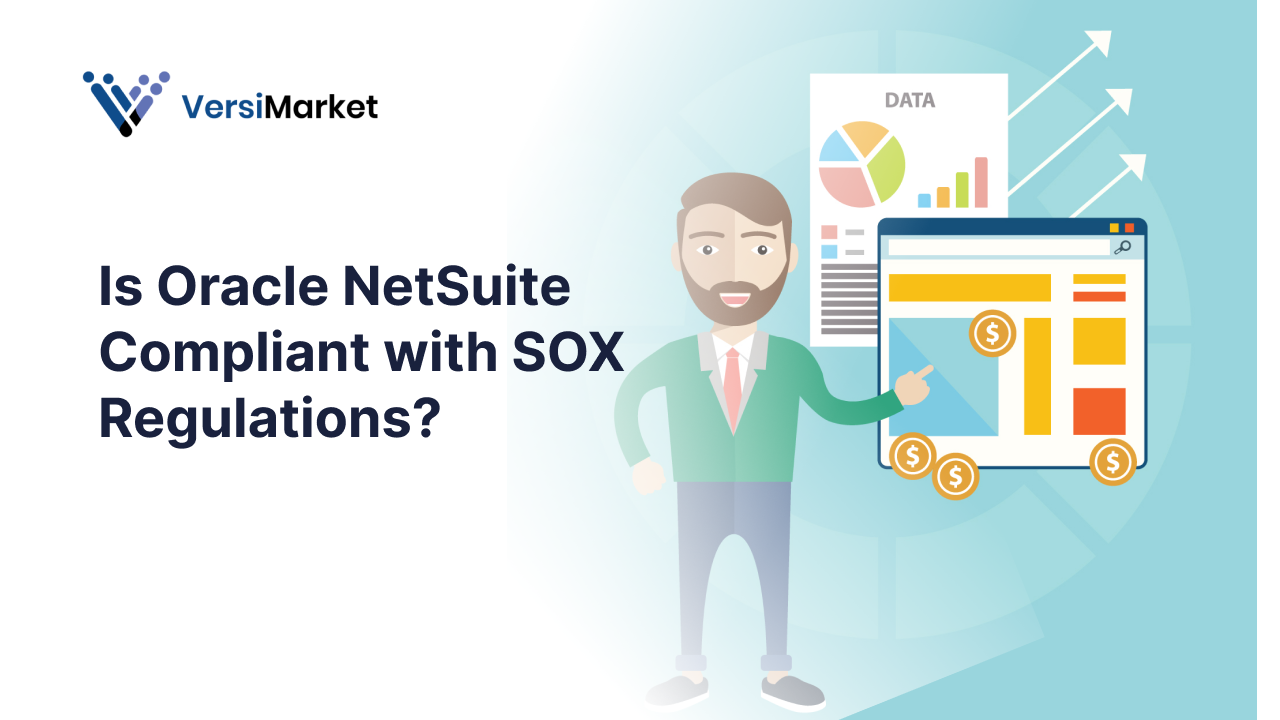
SOX Compliance is a stringent measure enforced by regulators to govern risks associated with ERPs. These regulations serve as statutory internal controls that a company must adopt to uphold data security protocols, which restrict access to financial information. Additionally, they help organizations protect sensitive data from insider threats, cyber-attacks, and security breaches. All publicly traded companies, wholly-owned subsidiaries, and foreign entities that trade publicly in the United States must adhere to SOX. This regulation also extends to accounting firms that audit public corporations. NetSuite provides a managed bundle known as Strongpoint for Change Management, crafted explicitly for SOX compliance. Nevertheless, NetSuite’s inherent features are sufficiently robust to create internal controls that align with SOX requirements.
1. Section 302 and 906: Corporate Accountability for Financial Reports
2. Section 404: Management Evaluation of Internal Controls
3. Section 409: Immediate Issuer Disclosures
4. Section 806: Sarbanes-Oxley Whistleblower Protection
Table of Contents
ToggleData Security Framework of NetSuite SOX Compliance
The data security framework for SOX compliance within NetSuite can be condensed into five foundational pillars:
1. Safeguard Financial Data Security
All transactions within NetSuite can be processed through approval workflows, ensuring that financial data is only visible to authorized personnel. Furthermore, NetSuite incorporates built-in mechanisms to limit data visibility exclusively to individuals involved in the respective transaction.
2. Prevent Data Tampering
Every role in NetSuite is protected by a series of permissions and restrictions that prevent unauthorized access to areas unrelated to an employee’s responsibilities. Additional View, Edit, and Create permissions can be customized for each employee or department group, minimizing the risk of data breaches and manipulation.
3. Monitor Data Breaches
NetSuite offers various tracking solutions to oversee every user activity within the system and on specific records. Features like Employee Login Audit Trails and System Notes on every record serve as significant trackers to provide an accurate overview of activities.
4. Records Accessible for Auditors
System Notes serve as a centralized location for auditors to obtain comprehensive details regarding any interaction with records. These event logs are readily available for audit purposes and facilitate a clear audit trail.
5. Showcase Compliance Every 90 Days
NetSuite maintains the required financial statements and internal control frameworks through its reports and saved searches. These are designed with the principles of data accountability and authenticity in mind.
Compliance with SOX is obligatory for all publicly traded companies in the United States to protect the interests of stakeholders. However, users of NetSuite in small and medium-sized enterprises also have the opportunity to meet these compliance requirements without incurring additional costs for managed bundles or modules.