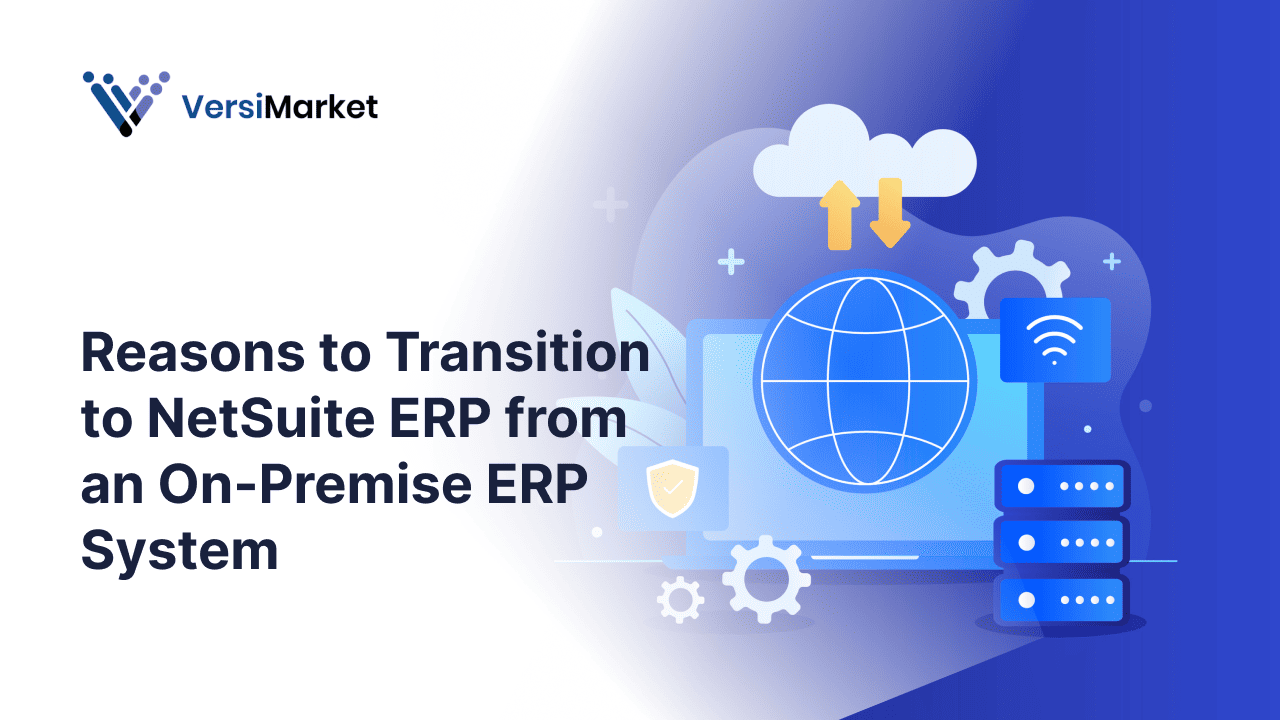
In today’s technology-driven landscape, ERPs serve as the foundation for every industry, vertical, and enterprise. They streamline business processes and foster synergy across diverse industry workflows. These systems can significantly boost the accuracy and efficiency of reporting. However, with changing market conditions, economic fluctuations, and external pressures, how can you guarantee your ERP system adapts accordingly? Legacy on-premise ERPs-especially those burdened by outdated versions, technical issues, or storage constraints-often disappoint. Instead of facilitating growth, they can impede it. This is prompting organizations to adopt modern cloud-based SaaS solutions like NetSuite ERP. These platforms surpass the limitations of traditional, fragmented on-premise ERP systems! Here are six compelling reasons why migrating to a cloud-based ERP such as NetSuite is the wiser option for your organization.
Table of Contents
Toggle6 Reasons to Transition to NetSuite from a Legacy On-Premise ERP
1. Enhanced Business Agility
A cloud-based ERP like Oracle NetSuite delivers accelerated time to value with ongoing regulatory compliance. It can be accessed globally, empowering mobile connectivity among buyers and suppliers at the forefront.
2. Rapid Version Updates
Version lock is a thing of the past! Every user can enjoy immediate access to the latest version updates, enabling rapid technological advancements. This drives NetSuite users to remain informed with the latest industry enhancements and functionalities.
3. Faster Implementation and Deployment
With integrated data support, customization becomes simpler and operates in real-time. Thanks to its cloud infrastructure, NetSuite enables faster implementation solutions that can be completed in just days. This outperforms traditional on-premise models, which often require months or even years to achieve a project go-live.
4. Continuous Access to Latest Industry Solutions
NetSuite provides ongoing version upgrades with a single click, guaranteeing that your ERP is consistently current. Its intuitive interface and resources like SuiteAnswers and Help Section equip users with real-time answers to industry challenges. This proactive strategy gives businesses a competitive advantage over outdated on-premise ERP systems.
5. Cost Efficiency
Cloud ERPs like NetSuite drastically lower IT costs by removing the necessity for extensive infrastructure, specialized IT personnel, and expensive hardware installations. With a self-service model, businesses can optimize operations while minimizing substantial upfront expenditures. The resulting savings can then be reinvested to enhance customer experiences, boost employee satisfaction, and drive overall business expansion.
6. Superior Protection Against Security Breaches
On-premise ERPs frequently encounter security threats and require additional software to safeguard data. In contrast, Oracle NetSuite incorporates its own built-in two-factor authentication mechanism to thwart hackers, reducing potential security breaches and creating a secure environment for all stakeholders.
Key Takeaways
To avoid disruptive software version locks and circumvent the high costs associated with IT infrastructures, it is advisable to choose cloud-based SaaS solutions like NetSuite and effectively address the challenges posed by on-premise ERPs!